The coast to coast register
Canadian Desk
A national desk for the decisions, trades and daily mechanics that move Canada from the Atlantic to the Pacific.
44.6488 N / 63.5752 W
Filed from the Atlantic berth. The register is read at 06:00, 12:00 and 18:00 local time, one coast at a time.

Tide board
Three coasts, three berths, one desk
| Coast | Berth | Tide | Notice |
|---|---|---|---|
| Atlantic | HalifaxLive | Low 04:12 / 0.6 m | The Atlantic berth opens on the port log and the provincial houses. The desk reads the tide, the ferry schedule and the catch reports before the first call. |
| Central | Montreal | Low 07:40 / 0.9 m | The Central berth follows the rail corridor and the assembly plants. The desk reads the yard moves, the power price and the federal order paper before the first call. |
| Pacific | Vancouver | Low 11:18 / 0.4 m | The Pacific berth watches the container terminals and the grain trains. The desk reads the berth bookings, the pass conditions and the export bookings before the first call. |
The desk
06:00
12:00
18:00
The desk is open from the first tide to the last call. The register is read in order, coast by coast.
A register, not a feed
The desk keeps one register for the whole country. Each berth files its own lines: the time, the place, the document and the change. The register is read in order, so a reader can see how a decision moved from one coast to another and what happened when it landed.
The desk does not publish a running feed. It publishes a register: a short, dated entry for each item that matters, with the primary document named at the top. The form is slower than a feed, and that is the point. A register can be checked, corrected and cited long after the news cycle has moved on.
The desk reads the same four things at each berth: the official record, the trade press, the price, and the person who has to act on it. The register is the place where those four readings meet. When they disagree, the disagreement is written down rather than smoothed over.
A line is filed when the desk can name the document behind it. That rule is the whole editorial policy in one sentence. If the document is missing, the line waits, and the waiting is recorded in the register.
Notice
No. 09
What the desk does
The desk covers the decisions, trades and daily mechanics that move Canada. It is a register rather than a wire or a column: a short, dated entry for each item, filed against the document that supports it. The register is built for readers who need to know what changed, when it changed, and what it means for the week ahead.
The desk does not chase every announcement. It follows the paper trail: the order, the tariff, the tender, the docket, the budget line. A filing that changes a number in a public document gets a line. A speech that repeats last month's position does not. The desk would rather be late and checkable than early and wrong.
The desk is a small room with a long table. The table holds the register, the tide board and the documents that are being read. The desk has no house voice and no campaign. It has a method, and the method is written on the wall: name the document, name the source, date the change, publish the correction.

- 01The primary document. Every item starts with the filing, the order, the docket or the budget line. The desk reads the document before it writes a word.
- 02The named source. The desk quotes people on the record, or it does not quote them. A briefing that cannot be attributed is not a source.
- 03The correction. A correction runs on the corrected item and is dated. The desk does not quietly rewrite a line and pretend the first version never existed.
- 04The contact. The desk takes corrections and documents through the contact form. It does not publish a direct address, and it does not take instructions from a source about what to print.
Berths
Three coasts, one register
The desk is filed from three berths. Each berth has its own time, its own tide and its own set of documents. The register is the common form that holds them together.
Corrections and documents go to the desk through the contact form. The form is the only intake channel.
01
Atlantic
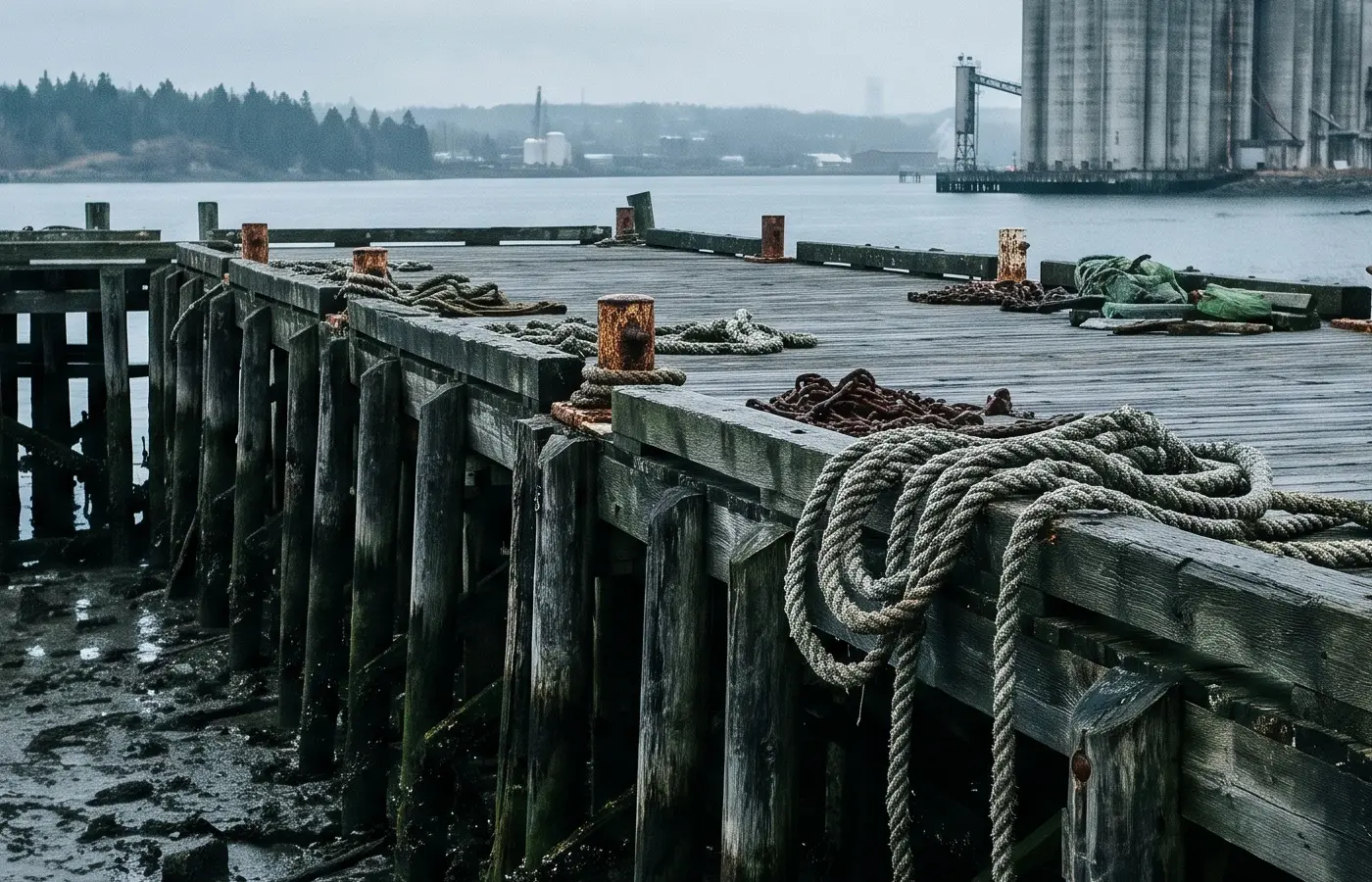
The Atlantic berth tracks the ports, the fisheries and the provincial houses from Halifax around to St. John's.
02
Central
The Central berth follows the rail corridor, the assembly plants and the federal buildings between Montreal and the capital.
03
Pacific
The Pacific berth watches the container terminals, the grain trains and the mountain passes that feed the coast.